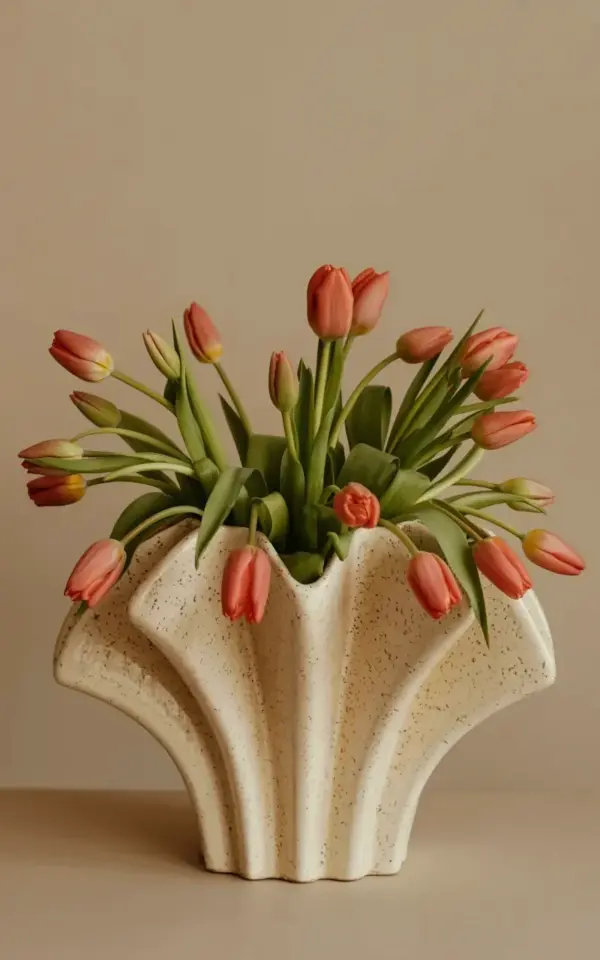
There is a quiet moment right after you place the last stem. I stepped back to examine the coral pink tulip arrangement on my studio shelf, and the whole scene just clicked. The soft, ruffled petals played beautifully against the chunky, rippled texture of the cream ceramic vase. It looked straight out of a slow-living magazine, but honestly, it took fifteen minutes and zero formal training.
The reason this works so well is that the elements do the work for you. The coral adds warmth, the textured vase adds depth, and the neutral beige backdrop lets everything breathe. If you have a bundle of tulips and a ceramic vase with a little personality, you already have everything you need. Here is exactly how this styling session came together.
Why the Rippled Cream Vase Steals the Show
We often treat the vase as an afterthought, but for this flower styling project, the container is the anchor. This is a chunky, handcrafted-looking piece with a distinctive ripple texture. The ridges create a fan-like, wave-like pattern around the entire body, almost like stacked ocean waves or corduroy fabric.
That tactile quality does the heavy lifting for the design. Because the vase has so much visual interest, you do not need a massive, over-stuffed bouquet. The cream color is soft enough to feel neutral, but the surface texture keeps it from looking boring. When the coral pink tulips sit inside the rippled rim, the contrast between the smooth, delicate flower petals and the rough, rhythmic ceramic lines becomes the whole point of the piece.
Selecting Cut Flowers: Tight Buds and Open Blooms
Let’s talk about the real star of the arrangement, the cut flowers themselves. When I buy tulips for a spring centerpiece, I refuse to pick a bunch where every flower looks exactly the same. Instead, I search for a mix of growth stages. This is the single best trick for making an arrangement look naturally gathered rather than artificially placed.
Here is what I look for when choosing stems:
– Tight, green-tinted buds: These are the future of the arrangement. They will slowly open over the next few days, extending the life of the display.
– Half-open blooms: These show a solid amount of coral color and give the bouquet a sense of building momentum.
– Fully open, almost saucer-like faces: These provide the soft, romantic focal points and catch the light immediately.
In this specific arrangement, I used about 15 to 20 stems. The open blooms were placed slightly lower, while the tighter buds poked up a little higher to create that natural, skyline-like variation.
Trimming Stems Short for a Relaxed Vibe
This is the step that most people are too nervous to try. I see so many store-bought tulip arrangements with stems towering way above the vase, standing at strict attention. For this flower styling session, I deliberately trimmed the stems shorter than I normally would.
Pro tip: Cut the stems to about 10 to 12 inches, just enough to peek over the rim of the ripped vase.
Cutting them short keeps the heavy ceramic vase feeling grounded and squat. When the tulips are short, they look like they are naturally resting on the rim, which instantly makes the whole setup feel more casual and organic. Use a sharp knife or clean clippers and cut at a 45-degree angle. Remove any lower leaves that might sit below the waterline to keep the water crystal clear and bacteria-free.
The Lazy Arrangement Technique That Actually Works
Forget the complex grids and the stem-spiraling florist tricks. This is the exact method I used to create this spring centerpiece, and it requires almost zero physical dexterity.
Start with a clean vase filled with cool, fresh water. Take two or three tulip stems in your hand, drop them into the vase, and let them naturally lean against the rippled sides. Rotate the vase a quarter turn, take two or three more stems, and drop them in.
Repeat this process until the vase feels full. The beautiful part about a rippled rim is that it gives the stems tiny little ledges to rest on, so they stay spread out instead of clumping together in a tight bunch. I gently adjusted a few of the open blooms to face forward and let the buds point whichever way they pleased. Finally, I fluffed the green leaves slightly outward to mask the water line and give the stems a little breathing room.
Styling with a Neutral Beige Backdrop
The photography and home decor styling here matter just as much as the flowers. You can have the most gorgeous coral pink tulips in the world, but if they are sitting in front of a cluttered, brightly colored background, the overall effect will fall flat.
In the photo, the vase and the tulips are placed on a plain beige surface against a neutral beige wall. This monochromatic, warm backdrop is not boring, it is strategic. The beige complements the cream undertones of the ceramic vase, while the coral pink petals stand out as the sole pop of color.
When you set up your own arrangement, try using a neutral palette to highlight your blooms. The soft, even lighting also plays a big role, casting gentle shadows below the rippled vase and making the texture look almost three-dimensional. If you have a spot with natural window light, that is your best bet for capturing those subtle shadows and true-to-life colors.
Caring for Cut Flowers to Maximize Their Vase Life
One of the reasons tulips are such a favorite for spring decor is their longevity, but only if you look after them. Coral pink tulips are famously thirsty and surprisingly dynamic. They will actually continue to grow and bend toward the light while sitting in the vase.
Here is my simple care routine: Keep the water level topped up every day. Recut the stems with a clean knife on day three or four to refresh their water uptake. Keep the arrangement out of direct afternoon sunlight, which causes the blooms to overheat and drop their petals quickly.
Because I trimmed them short, they will not flop over the sides as dramatically as long-stemmed varieties sometimes do. With cool temperatures and consistent water, this coral pink tulip arrangement should stay looking fresh for a solid five to seven days. A tiny splash of flower food keeps the water nutrient-rich, making those tight little buds finally burst open into beautiful, creamy coral faces.
Creating a stylized flower design like this one is mostly about trusting your eye and choosing a vase with character. The combination of a rippled cream ceramic vase and fresh tulips is a classic for a reason. I hope you feel inspired to buy yourselves some beautiful cut flowers this week, trim the stems short, and see what kind of magic you can make with a little texture and a calm, neutral space. Remember to save this styling tip for your next trip to the market.
Leave a Comment