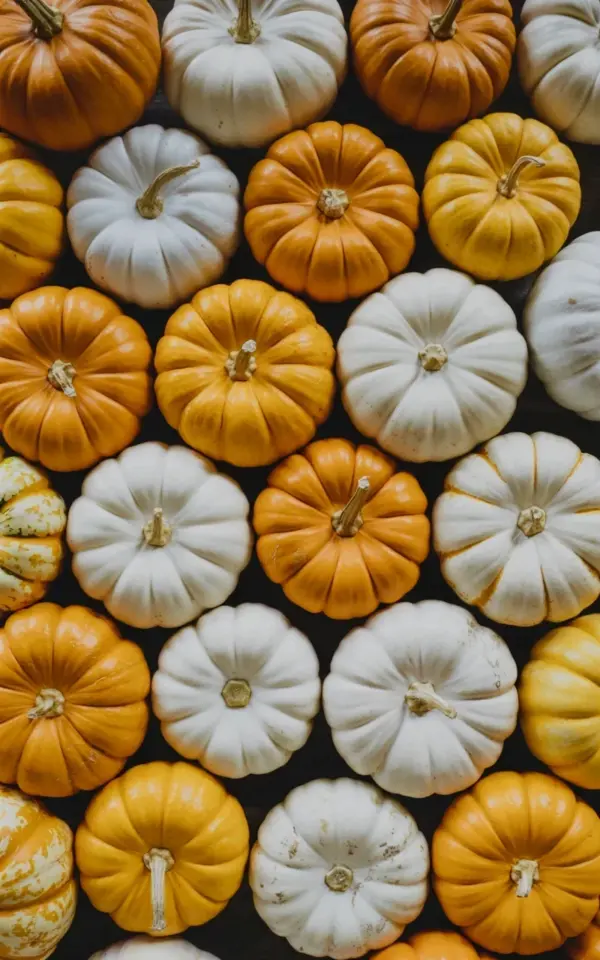
There is something quietly satisfying about a cluster of pumpkins that feels both intentional and effortless. The contrast of bright, matte orange against creamy white, all grounded by a deep, dark backdrop, creates a visual weight that instantly signals autumn. It is a look that leans into nature’s palette rather than relying on plastic perfection. This fall pumpkin decor relies on texture, tone, and negative space to create a display that feels collected over time, not assembled in haste.
The beauty of this particular setup is how approachable it is for any home. You do not need a sprawling farmhouse table or a professional stylist to recreate this mood. A simple top-down perspective, a dark surface, and a mix of heirloom-style pumpkins are all it takes to build a display with depth. By focusing on the interplay between the bright orange pumpkins and the subtler white ones, you can achieve a polished yet organic look that works as a seasonal centerpiece or a quiet corner accent.
Why the Dark Background Makes Fall Pumpkins Pop
A dark backdrop acts like a stage light for your seasonal decor, pulling every ridge and stem into sharp focus. When you place bright orange pumpkins against a charcoal or black surface, the color saturation appears richer and more vibrant. This technique is especially effective in photography, but it translates beautifully to real life when you use a dark table runner, a black tray, or even a painted wooden board.
The mood shifts significantly compared to a typical rustic burlap or light wood setting. A dark background adds an element of sophistication and drama, making the natural textures feel more curated. It also allows the varying sizes of the pumpkins to stand out, creating a layered landscape that draws the eye across the entire arrangement. This is a modern take on a classic harvest theme, perfect for those who prefer a sleek aesthetic.
How to Choose Pumpkins for a White and Orange Arrangement
Selecting the right pumpkins is about more than just grabbing the first ones you see at the market. For a fall table centerpiece that mimics this natural look, pay close attention to the surface finish. Look for orange pumpkins with a smooth, matte skin, as the lack of shine helps them feel grounded and earthy. The white pumpkins, often varieties like Cotton Candy or Baby Boo, may have a slightly textured or ribbed surface that adds subtle visual interest.
When mixing sizes, consider proportion and balance to keep the arrangement visually stable. Here are a few tips to guide your selection:
– Choose orange pumpkins that are slightly larger than their white counterparts to anchor the display.
– Look for stems that are intact, sturdy, and a bit rustic, as they add a critical touch of authenticity.
– Mix in one or two tiny gourds in neutral tones if you want to extend the arrangement without overwhelming it.
– Avoid any pumpkins with soft spots or blemishes, as they will decay quickly and spoil the look.
The Elements of a Natural Pumpkin Arrangement
The “random” pattern in this visual is actually a carefully considered layout that mimics organic growth. Instead of lining pumpkins in a neat row, cluster them in a tight grouping where they touch or slightly overlap. This creates a sense of abundance and cohesion, making the collection feel like a single, unified object rather than separate pieces.
Texture plays a huge role in keeping the arrangement from looking flat. The contrast between the smooth, matte orange pumpkins and the slightly textured white ones provides tactile variety. To enhance this in your own home, consider adding elements like dried leaves, small branches, or a length of natural twine woven between the pumpkins. These small additions bridge the gap between the pumpkins and your furniture, making the display feel integrated into the room.
Creating a Fall Table Vignette with Varying Heights
A top-down view flattens perspective, but in real life, height variation is what gives a vignette its professional polish. To recreate this specific look, focus on the ground level first, using the larger pumpkins as your base. Then, nestle the smaller white pumpkins into the spaces between them, allowing some to tilt slightly to catch the light in different ways.
For a true fall table centerpiece, you might place this arrangement on a large wooden board or a metal tray to define the space. If you want to add height without using candlesticks, stack a small, flat-bottomed pumpkin on top of a slightly larger one. Just ensure the base pumpkin is sturdy enough to support the weight. The goal is to keep the arrangement low enough for conversation across the table, but dense enough to feel substantial and intentional.
Transitioning Your Pumpkin Decor from Day to Night
One of the best aspects of this monochromatic style is its versatility across different times of day. During the day, natural light will soften the contrast, highlighting the matte finishes and the subtle differences in color between the white and orange pumpkins. The dark background will absorb some of the daylight, keeping the area feeling cozy and intimate.
As evening falls, the lighting changes and the decor transforms. If your arrangement is near a lamp or candlelight, the dark background helps the pumpkins glow, catching shadows in their stems and ridges. For a seasonal decor idea that works around the clock, consider adding a small, unobtrusive LED candle or a string of warm fairy lights draped underneath the pumpkins. This extends the life of your decor and makes the space feel welcoming well into the night.
Where to Place This Pumpkin Arrangement in Your Home
While a dining table is the most obvious choice, this style of arrangement is flexible enough for other surfaces. A dark entryway console table is an excellent spot, as the bright orange pumpkins will create a welcoming pop of color against a dark wall. You can also use a smaller version of this setup on a kitchen island, a coffee table, or even a wide windowsill.
If you are styling a shelf, consider breaking the rule of clustering and instead space a few pumpkins along the length of the shelf. Keep the dark background consistent by placing them on a dark ceramic tray or a stack of black-covered books. Wherever you decide to place them, ensure the visual weight is balanced. The contrast is strong, so a little goes a long way in a smaller space, while a larger room may benefit from a more generous cluster.
Keeping Your Natural Pumpkin Arrangement Fresh
Because you are using real, natural pumpkins, a little maintenance will help your arrangement last through the season. Keep the pumpkins out of direct sunlight and away from heat sources like radiators or ovens, as warmth accelerates the rotting process. A cool, dry room is ideal for preserving the integrity of the stems and the firmness of the skin.
Check your pumpkins every few days and gently wipe them with a soft, dry cloth to remove dust. If one starts to soften or show signs of mold, remove it immediately to prevent it from affecting the others. With proper care, your arrangement can look fresh for several weeks, allowing you to enjoy your seasonal setup well into late fall without any fuss.
Creating a display that leans on the bold contrast of white and orange pumpkins against a dark backdrop is a smart way to refresh your home for the season. It relies on simple principles of texture, proportion, and color blocking to create a look that feels current and elegant. Save this idea for your next seasonal setup, and do not be afraid to experiment with the size and shape of your gourds to make the look your own.
Leave a Comment