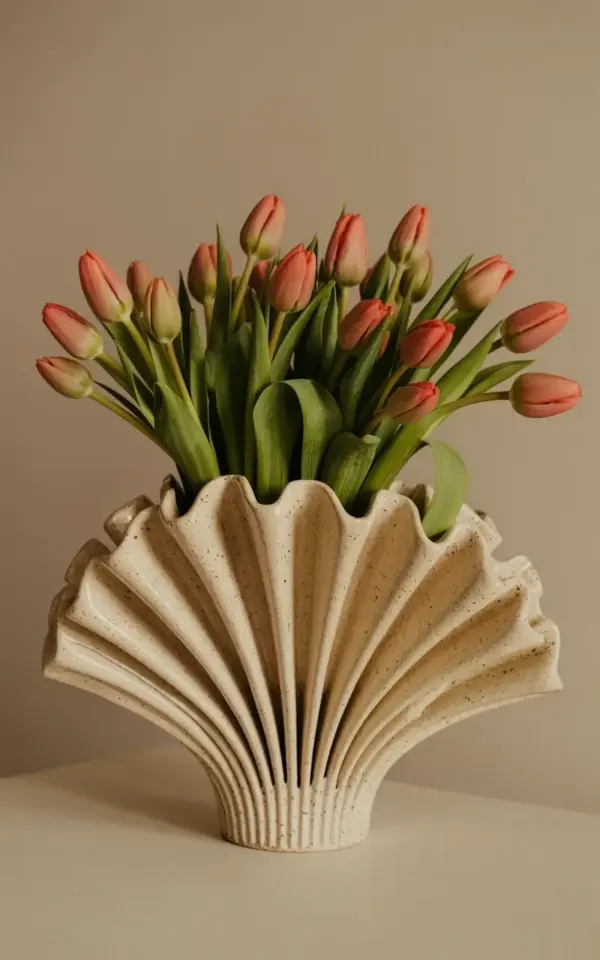
There is a particular quiet moment in early spring when the light shifts, and suddenly, a plain beige counter looks like the perfect stage for something soft and alive. Right now, that something is a cluster of coral pink tulips rising from a rippled cream ceramic vase on my kitchen island. I have made every mistake in the book when it comes to spring tulips, from chopping the stems too short to buying a vase that fought the blooms instead of flattering them. This year, I finally cracked the code on a spring centerpiece that feels effortless, and I want to save you the trial and error.
The specific arrangement in the photo is a masterclass in restraint. Fifteen to twenty tulips in various stages of bloom, from tight green buds to wide open faces, spill out of a vase with a distinctive fan-like texture. That rippled ceramic is not just decorative. The wave pattern catches the light and gives the eye something to trace while the coral pink flowers do their quiet, graceful thing. It is a reminder that the vessel is half the story.
Mistake #1: Overthinking the Tulip Variety for Spring
Do not get lost in the catalog. I have spent entire evenings comparing single late tulips, double early peonies, and fringed parrot types, and honestly, it is a rabbit hole. For a casual weekend centerpiece, the difference between varieties is less important than the color palette and the stem quality. Look, if you want that realistic, gathered-from-the-garden look, you want a mix of bloom stages. Some closed, some open, some somewhere in between.
Coral pink is a forgiving color. It plays nicely with cream, beige, and even a little bit of dusty blue if you have other decor around. When you are at the market, grab a bunch that shows a range of maturity. You want stems that feel firm, not slimy, and leaves that are perky. The specific variety matters less than the vibrancy of the petals.
Mistake #2: Choosing the Wrong Vase for Your Ceramic Vase Arrangement
This is the big one. A plain glass cylinder is fine, but it will never give you the weighted, grounded look of a textured ceramic vase. The cream vase in the photo has those ridges, a wave-like pattern that repeats around the whole body. That texture does something important. It breaks up the mass of green stems and soft pink blooms so the arrangement does not look like a blob.
Choose a vase with some visual heft if you are using tall tulips. The ripples in the ceramic also create subtle shadows, which adds depth even before you put a single flower in it. And here is a practical tip: a vase with a narrower neck, or at least a smaller opening, helps the tulips fan out naturally instead of flopping all over the place. The opening on this one seems to hold the stems just tight enough to create that lovely fan-like spread.
Mistake #3: Cramming Every Stem into One Tight Bunch
Resist the urge to jam all your tulips in like you are packing a suitcase. They need room to move, to bend toward the light, to find their own angle. I have learned this the hard way. When you overstuff, you end up with a dense, unnatural dome that hides the beauty of individual stems.
Instead, think about layering. Put a few stems in first to establish the height, then rotate the vase and add more, letting them cross slightly at the center. The green stems emerging from the top of the vase should look like they are having a conversation. Use a spiral method when you pick them up, wrapping your thumb and forefinger around the bunch, and let them fall naturally into the opening.
Here are a few quick rules I actually follow now:
– Trim stems at an angle, about an inch off, before placing them in water.
– Remove any leaves that will sit below the water line. They rot fast and ruin the water.
– Mix in a few buds, even if they are green, they add a lovely promise of spring.
– Do not crowd the vase, eleven or twelve quality stems beats twenty crushed ones.
Mistake #4: Ignoring the Stems and Leaves After Cutting
Tulips are not like roses. They keep growing after you cut them, which means they will bend and stretch and sometimes go rogue on you. This is normal. The green stems in the photo look tidy and upright, but that is because someone probably gave them a couple of hours to drink up before arranging them.
Give your tulips a solid conditioning period. Let them sit in the vase in a cool spot for at least an hour before you start fussing with the final placement. They will stand up straighter and last longer. And do not be afraid to re-trim the stems a day later. A fresh cut opens the capillary action and helps them drink. Also, check the water level. Tulips are thirsty, they can drain a vase surprisingly fast in a warm room.
Mistake #5: Forgetting the Setting Around Your Spring Floral Arrangement
The arrangement in the photo does not exist in a vacuum. It is sitting on a plain beige surface against a neutral beige background. That is a deliberate choice. The soft lighting and the lack of visual clutter let the coral pink pops and the cream ceramic texture do all the work.
Do not anchor your centerpiece next to a stack of bright mail, a fruit bowl, and a bag of chips. Give it some breathing room. A simple runner, a neutral counter, or a wooden table with a subtle grain will make the arrangement look ten times more considered. The even, soft light from a window makes a huge difference too. It melts into the beige background and creates that subtle shadow beneath the vase, which grounds the entire composition.
Mistake #6: Expecting a One-Time Arrangement to Do All the Work
Here is the thing. A beautiful centerpiece is not a one-and-done project. You will need to tinker with it. I keep a pair of sharp floral snips right on the windowsill next to the vase because I know I will be fussing with it all weekend. Tulips are lively, they will shift, dip, and occasionally do a dramatic droop.
It is also worth the effort for an Easter table. The combination of coral pink flowers and that textured cream ceramic vase feels seasonal without being a cliché. It is not a bunny or an egg in sight, just a soft, modern nod to spring. That is the kind of thing that feels refreshing and honest.
So, my real advice? Stop chasing perfection and start paying attention to the details. Get a vase with some personality, choose blooms in a color that speaks to you, and give them the time and space to be beautiful. The effort is minimal, but the payoff is a little corner of calm in your home.
I hope this helps you build a spring centerpiece you genuinely love. Save this for your next flower arrangement, and maybe grab yourself a coffee while you arrange those stems. It is a nice way to spend a Saturday morning.
Leave a Comment